

stolz-route
Chooses one smallest sufficient route and falls back safely when capabilities are missing.
decideI.A rational operator for context
Open source / provider-neutral core / evidence-gated claims
STOLZ A.I. has five core optimization skills and four optional workflows: guard, evidence, browser and MCP. v0.19 adds offline MCP catalogs and a bridge for an existing authorized client. Source-byte measurements and mock checks do not establish provider-token savings or live vendor compatibility.
§ 1The current v0.14 cohorts show overhead, not savings.
The literary source is part of the product idea
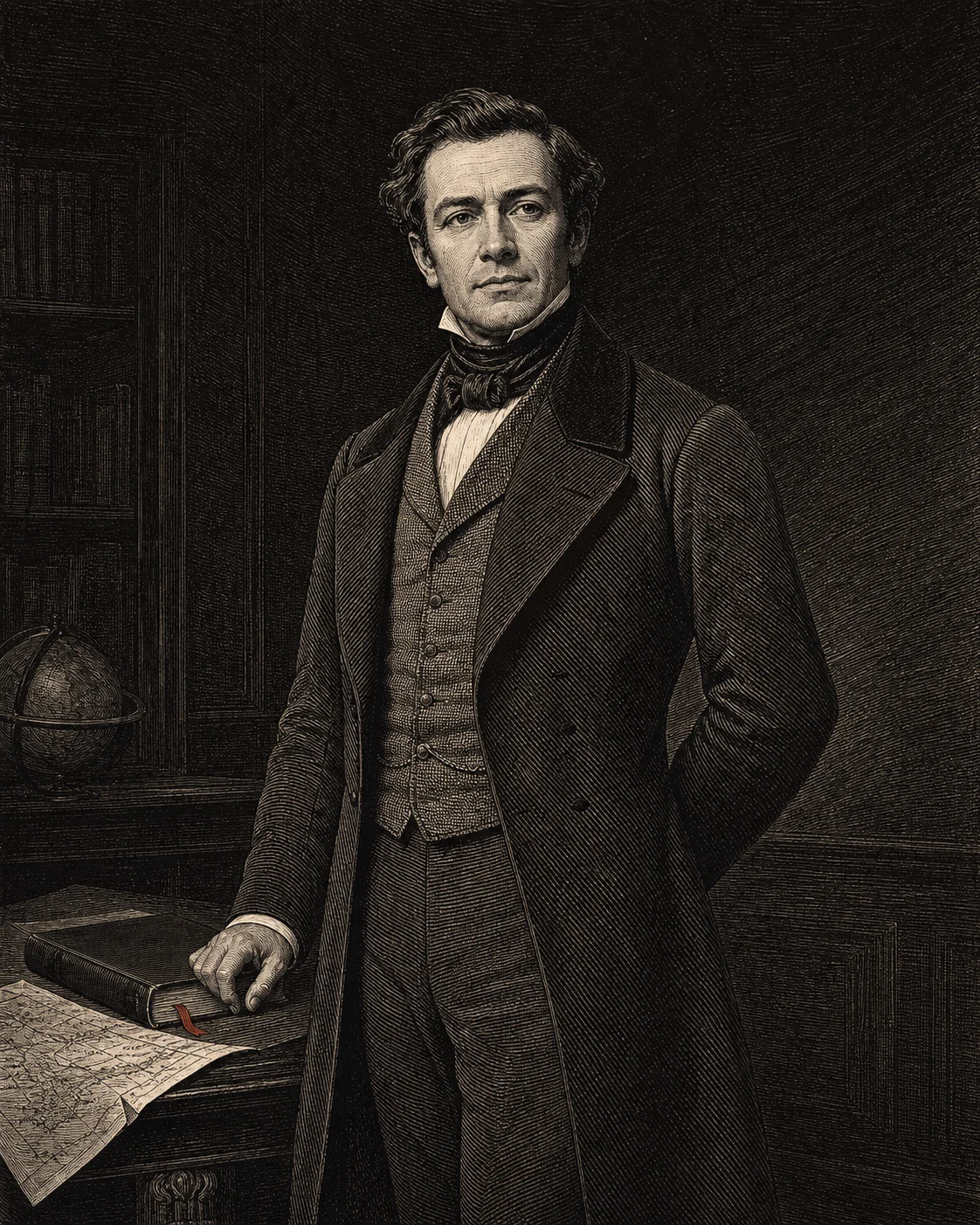
In Goncharov's novel, Stolz is active, educated, practical, and systematic — a counterweight to inertia. STOLZ A.I. translates that character into agent engineering: plan before loading, act without fuss, and spend resources only where they move the task forward.
«Движений лишних у него не было» — “He made no unnecessary movements.”
Ivan Goncharov, Oblomov, part II
III.Five core skills, one discipline
Install only what the route needs
Each skill has a narrow trigger and a safe fallback. STOLZ A.I. is not a catch-all prompt and does not replace the model, the runtime, or project-specific verification. Optional stolz-guard is installed separately; it does not enforce tool permissions or guarantee attack detection.
Chooses one smallest sufficient route and falls back safely when capabilities are missing.
decideValidates an existing manifest or read-ledger entry before loading required immutable context. Ordinary source reads do not trigger this skill.
loadReuses a result only when its identity and verification still match the task.
reuseKeeps unchanged polls outside model narration and reports material transitions.
observeRecords a comparison only after outcome and verification gates pass; negative results stay visible.
proveIV.Smallest sufficient route
The red editor's line does not cross out reasoning or verification. It crosses out work that adds no new information: broad reads, duplicate commands, stale results, and narration of unchanged state.
V.Bounded measurement evidence
v0.14 retains 40 public or synthetic attempts in 20 matched pairs. Required outcomes and verification matched, while every separate cohort used more comparable input-plus-output tokens on the STOLZ route.
Read the bounded v0.14 resultNo retries or exclusions were used.
Outcome and verification were equal inside every pair.
Sol/xhigh and Astra/medium remain separate and are never pooled.
Provider totals, pricing, cost, speed, general savings, and cross-model compatibility are unavailable or unsupported.
VI.Compatibility without borrowed authority
Verified local executions exist; v0.7 has no Codex C2 evidence row.
C2 applies only to this exact runtime version and adapter 1.0.0.
C2 applies only to this exact runtime version and adapter 1.0.0.
No current provider pair is admitted for provider-call or savings claims.
VII.Start with the route
Copy the prompt into Codex or Claude Code. The same request works on Windows, macOS, and Linux.
v0.8 adds local installation lifecycle checks: `status` and `doctor` make no provider or model calls. Updates, rollback, and removal start as dry-runs and may change only files owned by the STOLZ manifest.
Install all STOLZ A.I. skills and their reference files for yourself from https://github.com/Sergey360/stolz-ai/releases/latest. Verify the archive's SHA-256, use your user-level skills directory, preserve existing skills, and verify the installation.Paste this into your agent's chat. It can download and install the skills for your system.
After installation, open a new agent session.
VIII.Reader's notes
No. It targets waste around reasoning: unnecessary context, repeated operations, stale reuse, noisy monitoring, and ungated comparisons.
No. In the bounded v0.14 sample, all four separate cohorts used more comparable input-plus-output tokens on the STOLZ route. Provider totals, cache-write, compaction, pricing, cost, and account limits were unavailable, so no general savings claim is made.
No. The core is provider-neutral. v0.7 has exact C2 evidence for Claude Code 2.1.251 and Qwen Code 0.22.3, while Codex CLI 0.153.4 is verified installed-local without a v0.7 C2 row. All C3 provider-pair claims remain withheld.
The character defines the product ethic: educated action, planning, resource discipline, and movement toward a concrete result — not saving at any cost.
IX.Public change log
All stable tags / verified artifacts / changes in brief
Every stable release is listed here. Each entry names the main change and links to the complete notes on GitHub.
View all releasesOptional stolz-mcp adds offline catalog auditing, selected tool definitions and a bridge for an existing authorized MCP client.
Optional stolz-browser guides tab reuse, ownership, sequential lifecycle operations and recovery decisions in Codex Desktop.
Optional stolz-evidence records material actually read, supported findings and open requirements through corrections and handoffs.
Review prompts and untrusted instructions for security risks while preserving the task and existing authorization.
Retain the goal while external work runs, verify its result, and continue the original task.
Published 40 no-retry attempts in 20 matched pairs. Outcomes matched, but every separate cohort used more comparable tokens on the STOLZ route; savings claims remain withheld.
Added reproducible setup with the public stolz-profile CLI: reviewed install and update, doctor diagnostics, team-lock checks, recovery, and verified rollback.
Live evaluation on the installed Codex CLI and model validated predictable skill routing: refined context/reuse triggers, fail-closed scoring, complete public artifacts, and packaged-reference checks.
Aligned five skills with OpenAI's skills and prompts guidance for GPT-6 Astra: known tasks select the right skill, ordinary coding skips STOLZ, and details load on demand.
Expanded real-world testing in Codex CLI: bug fixes, code review, tests, documentation research, multi-step work, and task handoffs.
Added an opt-in local state module for Codex. Context, verified results, and task progress can now survive a restart.
Added installation diagnostics, update previews, and rollback. Updates and removal protect your own project files.
Updated setup guides for Codex, Claude Code, and Qwen Code, with examples for selecting context and reusing verified results.
Added runtime test reports for Claude Code 2.1.251 and Qwen Code 0.22.3, with version tracking to flag results that need rechecking.
Refined the context and task-state skills: track individual code fragments and resume monitoring after a restart without repeated notifications.
Hardened the installation package: refined its file list and verified installation, backup, and recovery of all five skills.
Added tools for measuring agent runs and fixed report verification so it works directly from the installed package.
Published five installable skills on GitHub, with routing tools, open data schemas, and a reproducible example benchmark.